Baby Acne vs Eczema – What’s the Difference?
Parents often panic when their baby develops bumps, redness or dry patches — and understandably so. Two of the most common skin concerns in babies are baby acne and eczema, but they are not the same thing and don’t require the same approach.
Understanding the difference can prevent unnecessary product overload, irritation and frustration.
What Is Baby Acne?
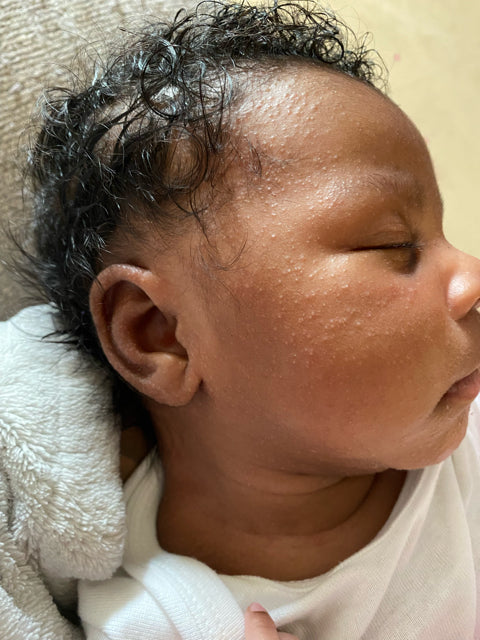
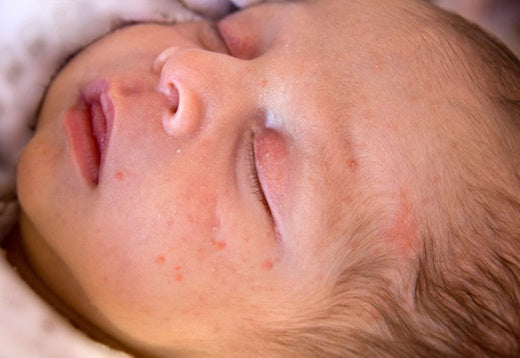
Baby acne usually appears within the first 2–6 weeks of life and looks like:
- Small red or white bumps
- Most common on cheeks, chin and forehead
- Not itchy or painful
- Comes and goes on it’s own
Baby acne is often linked to:
- Hormonal changes after birth
- Overstimulation of oil glands
- Heat or friction
👉 Important: Baby acne does not need harsh treatment or drying products. In most cases, less is more.
What Is Baby Eczema?
Eczema (also called atopic dermatitis) looks very different:
- Dry, rough, scaly patches
- Redness and inflammation
- Can appear on cheeks, arms, legs, folds and torso
- Often itchy and recurring
- Skin feels fragile and compromised
Eczema is linked to:
- A weakened skin barrier
- Moisture loss
- Sensitivity to products, fabrics, heat or allergens
Unlike baby acne, eczema does not resolve without consistent barrier support.
Why Baby Skin Reacts So Easily
Baby skin is:
- Up to 30% thinner than adult skin
- Still developing its protective barrier
- More prone to moisture loss
- Highly sensitive to fragrance, soaps and over-cleansing
When the skin barrier is disrupted, irritation, dryness and flare-ups are far more likely.
What NOT to Use on Baby Skin
Many well-intentioned products can worsen irritation:
- Fragranced baby washes and lotions
- Alcohol-based sprays
- Essential oils directly on skin
- Over-washing or daily soap use
- Harsh exfoliation or scrubs
These strip the skin barrier instead of supporting it.
How Barrier Support Helps
Healthy baby skin depends on barrier repair, not aggressive treatment.
Barrier-supporting care:
- Reduces moisture loss
- Calms inflammation
- Helps skin recover naturally
- Prevents repeated flare-ups
Our gentle support options include:
- Barrier Support Bath Soak to calm skin during bathing
- Soothing Hair & Body Oil to reduce dryness and sensitivity
- Soothing Hair & Body Butter to protect compromised skin
- Nourishing Hair & Body Butter to deeply moisturise plus protect compromised skin
- Comforting Oil to deeply hydrate, calm itchiness and alleviate cradle cap
- Gentle Skin Mist to calm redness and surface irritation
- Eczema Soothe Drops to support skin health from within
Supporting the barrier consistently helps skin settle over time — without overwhelming it.

Written by Lotus Pes


Leave a comment
This site is protected by hCaptcha and the hCaptcha Privacy Policy and Terms of Service apply.